
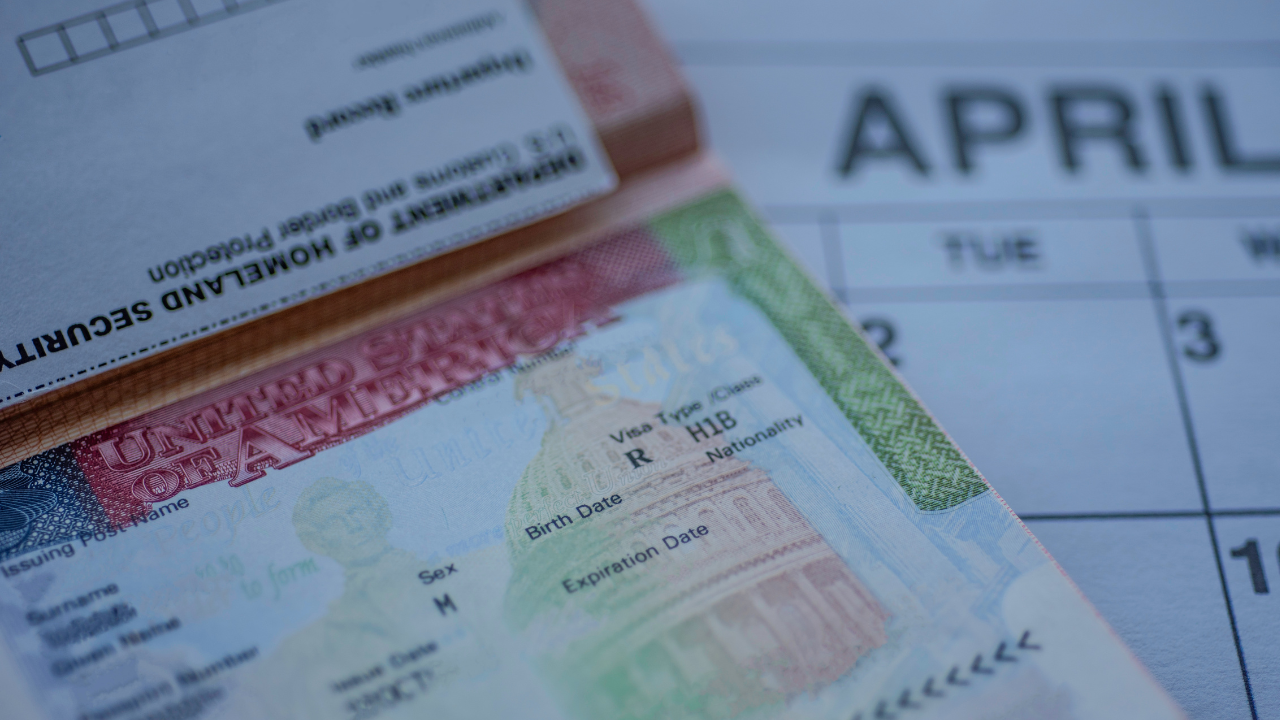
Every year, H1B demand exceeds the available visa cap, making selection one of the most critical steps for employers and applicants. The H1B lottery process is the USCIS system used to select registrations that can move forward to the H1B petition stage when applications exceed available visa numbers.
Starting February 27, 2026, the selection process changed from a random draw to a wage-weighted system, where higher Occupational Employment and Wage Statistics (OEWS) wage levels receive more entries in the selection pool. Before selection, employers must complete the H1B lottery registration process and pay the required fee.
In this guide, you will learn how H1B applicants are selected, understand the H1B cap selection 2026 process, and explore the key steps, timeline, and requirements involved in securing an H1B visa
What Is the H1B Lottery Process and Why Does USCIS Use It?
The H1B lottery process helps USCIS manage the high demand for a limited number of H 1B visas each year. USCIS uses this system to select eligible registrations when the number of applicants exceeds the available visa cap.

The annual H1B cap includes 85,000 visa numbers:
- 65,000 visas under the regular H-1B cap
- 20,000 visas reserved for applicants with a U.S. master’s degree or higher
To make the process faster and more efficient, USCIS introduced electronic registration in 2020. Instead of employers preparing complete H1B petitions for every candidate, they first submit a short online registration. Only selected registrations move forward to the full petition stage.
H1B Lottery Selection vs Petition Approval: What Is the Difference?
Understanding the difference between selection and approval is important when reviewing how H1B applicants are selected.
Being selected in the H1B lottery process does not mean your H1B visa is approved. Selection only confirms that USCIS has chosen the registration from the available pool. After selection, the employer must submit a complete H1B petition with required documents, and USCIS separately reviews whether the petition meets all eligibility requirements.
In simple terms:
- Registration selection: USCIS chooses your registration from the pool.
- Petition approval: USCIS approves the complete H1B petition after reviewing evidence.
Who Can Submit an H1B Lottery Registration?
Only employers or their authorized legal representatives can submit an H1B lottery registration process entry. Applicants cannot register themselves directly.
Because your employer handles the registration, it is important to coordinate early with your company’s HR team or immigration attorney. Proper preparation helps ensure your registration is submitted correctly and on time.
How Does the H1B Lottery Process Work? Step-by-Step Guide
The H1B lottery process involves multiple stages, from employer registration to USCIS petition review. Understanding each step helps you know what happens after registration and what your employer must complete before approval.

Step 1: Employer Completes the H1B Lottery Registration Process
The employer starts the H1B lottery registration process through a USCIS organizational account by submitting basic details about the candidate and job position. The employer must also pay the $215 registration fee for each beneficiary.
Under the updated system, registrations are linked to the candidate’s OEWS wage level, so the information submitted must be accurate and supported if the registration is selected.
Step 2: USCIS Checks Registration Eligibility
After submission, USCIS reviews registrations to remove duplicate entries and incomplete applications. This step only confirms that the registration is valid and eligible for selection.
USCIS does not review the candidate’s full qualifications or approve the visa at this stage. Only eligible registrations move into the selection pool.
Step 3: USCIS Conducts the H1B Cap Selection 2026 Process
The H1B cap selection 2026 process uses a wage-weighted selection system. Registrations receive entries based on their assigned OEWS wage level:
| OEWS Wage Level | Selection Entries |
| Level IV | 4 entries |
| Level III | 3 entries |
| Level II | 2 entries |
| Level I | 1 entry |
Candidates selected under the U.S. master’s degree exemption are first considered for the 20,000 reserved slots. Those not selected in this round are automatically included in the regular cap selection for the remaining 65,000 slots.
Although some registrations receive additional entries, each candidate can only be selected once.
Step 4: Employer Files the H1B Petition After Selection
If USCIS selects a registration, the employer receives a notice through their USCIS account. The employer then has 90 days to submit Form I-129 and supporting documents.
The petition must include:
- Certified Labor Condition Application (LCA)
- Proof of the candidate’s qualifications
- Job offer details
- Evidence supporting the wage level listed during registration
Step 5: USCIS Reviews the H1B Petition
Selection does not guarantee approval. USCIS conducts a separate review to confirm that the job qualifies as a specialty occupation, the candidate meets eligibility requirements, and all supporting documents are accurate.
The H1B visa lottery results timeline only shows whether a registration is selected. Final approval depends on USCIS review of the complete petition, which usually takes around three to six months under standard processing.
H1B Cap Selection 2026 Timeline: Key Dates and Recent Changes
The H1B cap selection 2026 process introduced important updates that applicants and employers should understand. Tracking the registration dates, selection notices, and filing deadlines helps you prepare for each stage of the H1B journey.
For the FY 2027 cap season, the H1B lottery registration process ran from March 4 to March 19, 2026, with a $215 registration fee per beneficiary. USCIS completed the weighted selection and issued selection notices by March 31, 2026.
| H1B Cap Selection 2026 Timeline | Date |
| Registration period | March 4 to March 19, 2026 |
| Selection notices issued | March 31, 2026 |
| Petition filing period | April 1 to June 30, 2026 |
| Earliest employment start date | October 1, 2026 |
After selection, employers can file H1B petitions during the designated filing window. However, selection only allows the employer to move forward with the petition process and does not guarantee approval.
Major Changes Affecting the H1B Lottery Process
The current H1B lottery process has seen changes beyond the selection method. Registration numbers have declined in recent cycles after USCIS introduced fraud-prevention measures. Additionally, a 2025 presidential proclamation introduced a $100,000 fee for certain new H-1B petitions involving beneficiaries who need consular processing abroad. This fee generally does not apply to candidates changing status from within the United States.
Since these rules are still subject to legal review and further guidance, employers should verify the latest USCIS updates before making decisions based on previous H1B timelines.
Because dates and requirements can change each year, staying updated with official USCIS announcements is essential for understanding the latest H1B visa lottery results timeline and planning your next steps.
Who Is Eligible for the H1B Lottery Process?
The H1B lottery process is open to foreign professionals who meet specific education, job, and employer requirements. Before entering the selection pool, you and your employer must ensure that the role and qualifications meet USCIS standards.

Educational Requirements for H1B Applicants
To qualify for the H1B lottery process, you generally need:
- A U.S. bachelor’s degree or foreign equivalent in a field related to the offered position.
- A qualifying U.S. master’s degree or higher to be considered for the advanced-degree exemption round.
- An educational background that matches the specialty occupation requirements.
Employer and Job Requirements
Your employer must offer a position that qualifies as a specialty occupation. This means the role must require specialized knowledge and usually a related degree or equivalent qualification.
The employer must also provide a legitimate job offer and meet USCIS requirements for sponsoring an H-1B worker.
Who Commonly Applies Through the H1B Lottery Process?
Many professionals use the H1B lottery process to pursue employment opportunities in the United States, including:
- Technology professionals
- Engineers
- Researchers
- Healthcare professionals
- Business specialists
Understanding these requirements can help you determine whether you are eligible before your employer submits your registration.
What Happens After You Are Selected in the H1B Lottery Process?
Being selected in the H1B lottery process allows your employer to move forward with filing an H1B petition, but it does not mean your visa is approved. After selection, you and your employer must complete several important steps before USCIS makes a final decision.
Steps After H1B Lottery Selection
- Confirm your selection notice with your employer or immigration counsel.
- Collect required documents, including diplomas, transcripts, offer letters, and employment records.
- Review petition details carefully, especially the job description and listed wage level.
- Ensure your employer files Form I-129 within the 90-day filing window.
- Wait for the USCIS decision, which usually takes three to six months under standard processing.
- Complete visa stamping at a U.S. consulate if your situation requires it.
Because recent updates to wage-weighted selection rules, fees, and consular processing requirements can affect your case, reviewing your situation with an experienced immigration attorney can help you avoid errors. This is especially important if you have a complex employment history, previous visa concerns, or questions about the correct wage level for your registration.
H1B Lottery Process vs. H1B Petition Approval: Key Differences
Many applicants confuse H1B lottery process selection with final H1B approval. While selection allows your employer to submit a petition, USCIS must still review and approve the full petition before you can receive H1B status.
The table below explains the difference between the H1B lottery process and H1B petition approval:
| Stage | H1B Lottery Process | H-1B Petition Approval |
| Purpose | Selects registrations eligible for petition filing | Determines final H-1B eligibility |
| Managed by | USCIS registration and selection system | USCIS petition review process |
| Selection method | Wage-weighted selection when registrations exceed the cap | Evidence-based evaluation of the petition |
| Outcome | Allows the employer to file an H-1B petition | Approval or denial decision |
Being selected in the H1B lottery process is an important step, but it does not guarantee a visa. It only gives your employer permission to move forward with the petition filing process. USCIS must still review the submitted evidence and confirm that all H1B requirements are met before approval.
If you are exploring self-petition options for your U.S. immigration journey, learn more about creating a strong Immigration Business Plan for US Visa Approval and how it can support your application.
Common Mistakes That Can Affect the H1B Lottery Process
Small errors during the H1B lottery process can create delays, complications, or even prevent your employer from moving forward. Understanding common mistakes helps you prepare accurate registration details and avoid issues after selection.

Mistakes to Avoid During the H1B Lottery Process
- Providing incorrect or inconsistent candidate information during registration.
- Missing USCIS registration or petition filing deadlines.
- Submitting improper duplicate registrations for the same candidate.
- Selecting a wage level that cannot be supported later with petition evidence.
- Providing incomplete supporting documents after selection.
- Assuming lottery selection guarantees H1B approval.
With the updated wage-weighted selection system, accurate wage-level information and proper documentation are more important than ever. Preparing carefully before registration can help reduce avoidable issues during the later stages of the process. You can also consult an experienced immigration expert to review your case, confirm your eligibility, and ensure your registration and petition details are prepared correctly.
Final Thoughts
The H1B lottery process involves several important stages, including registration, weighted selection, petition filing, and USCIS review. Each step has specific requirements, and careful preparation can help reduce the risk of delays, errors, or denials.
Since the selection rules and requirements have changed recently, getting professional guidance before registration and petition filing can help you make informed decisions and avoid costly mistakes. Shaws Immigration Consulting can help you understand your H-1B options, review your eligibility, and navigate the process with the right strategy.
FAQs
How does the H1B lottery process work?
USCIS selects eligible registrations from the pool using a wage-weighted method: candidates registered at higher OEWS wage levels receive more entries, which improves their relative odds when demand exceeds the annual cap.
When does the H1B lottery process start for 2026?
USCIS announces exact registration dates annually, typically in early spring. Applicants and employers should monitor official USCIS announcements rather than relying on prior-year dates, since both the calendar and the underlying rules have changed recently.
What does the H1B lottery registration process involve?
It requires the employer to create a USCIS organizational account, submit basic candidate and position details, select the correct OEWS wage level, and pay the $215 registration fee, all before the annual registration window closes.
Does H1B lottery selection guarantee visa approval?
No. Selection only allows the employer to file an H-1B petition. USCIS still reviews that petition in full before deciding whether to approve it.
How many times can an applicant enter the H1B lottery process?
This depends on how many employers submit valid registrations on a candidate’s behalf and on USCIS rules for that filing year; multiple bona fide registrations from different employers are permitted, but duplicate registrations for the same employer-candidate pair are not.
What happens if I am not selected in the H1B lottery?
Candidates who aren’t selected in the initial round may be included automatically in any subsequent selection rounds run later in the year, and some may also explore other visa categories or cap-exempt employment options in the meantime.